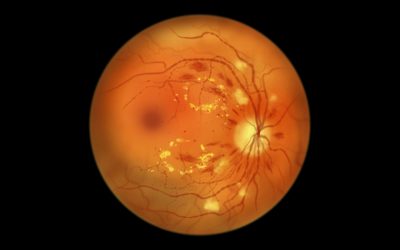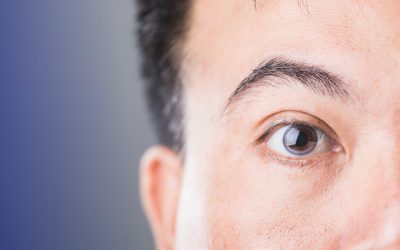


Almost 20 million U.S. adults currently live with macular degeneration symptoms that often go completely unnoticed until significant vision damage has already occurred. As the leading cause of severe vision loss in people 50 and older, age-related macular degeneration (AMD) represents a silent threat that deserves your immediate attention.
What makes AMD particularly troubling is its stealth progression. During the early and intermediate stages, you may not notice any symptoms whatsoever. This silent advancement allows permanent damage to occur before you realize anything is wrong. By 2040, experts predict that 288 million people worldwide will have macular degeneration, yet many cases remain undetected until irreversible vision loss has already happened.
Macular degeneration rarely leads to complete blindness, but it can dramatically alter your daily life. Reading becomes challenging, faces blur beyond recognition, and driving at night turns dangerous. Simple activities you’ve always taken for granted suddenly require extra effort and accommodation.
Early detection of AMD through awareness of subtle vision changes can lead to timely intervention.
Understanding the warning signs of macular degeneration will encourage you to seek professional care before the condition steals more of your sight. Your vision deserves protection throughout your lifetime, and recognizing these early signals can make the difference between maintaining functional sight and facing preventable vision loss.
Everyday signs you might be missing
Your eyes send subtle signals when macular degeneration begins its silent assault on your vision. These warning signs often develop so gradually that you might dismiss them as normal aging or temporary inconveniences.
Straight lines that suddenly appear wavy, curved, or bent signal a condition called metamorphopsia. This distortion occurs when waste products called drusen accumulate beneath your retina like tiny speed bumps, causing the normally smooth surface to become uneven. What once looked perfectly straight, such as door frames, telephone poles, or the edges of buildings, now appear to bend and ripple.
Reading may also become an exercise in frustration when words disappear from the center of the page. You might find yourself unconsciously compensating by choosing larger print books or cranking up the brightness on your electronic devices. That gradual migration toward windows for better light or the addition of more lamps throughout your home may be an early cry for help from your eyes.
Face recognition becomes increasingly difficult as the condition progresses. Studies reveal that people with macular degeneration achieve only 42% accuracy when recognizing faces, compared to 92% for those with healthy vision. The recognition process also takes about twice as long: 4 seconds versus 2 seconds for people without the condition.
Driving presents new challenges, particularly at night when glare and halos surround lights. Objects blend into backgrounds when colors and shades appear similar, creating hazards that increase your risk of trips and falls. You develop what eye care professionals describe as a “love-hate relationship with light”, a situation where you crave brightness for tasks while simultaneously becoming oversensitive to glare.
These changes don’t happen overnight, making them easy to rationalize away as temporary problems. However, recognizing these patterns empowers you to seek professional evaluation before your vision could suffer permanent damage.
What causes these symptoms and who is at risk
Age tells only part of your macular degeneration risk story. While advancing years create the foundation for this condition, several additional factors can dramatically increase your chances of developing sight-threatening vision loss.
Your risk as an odds ratio rises from 1 at ages 55-69 to between 4.4-8.7 at 70-79 and jumps to 18.8-32.3 at ages 80-86 years. These odds ratios represent your likelihood of facing central vision loss as you age, however other factors can further increase your risk.
Genetics creates your strongest risk multiplier
Your family’s history plays a vital role since macular degeneration runs in families. Having a parent or sibling with AMD increases your risk by 50%. What’s particularly striking: genetic factors contribute to approximately 70% of AMD cases. This means your family history shapes your vulnerability more than most people realize.
Smoking accelerates vision damage
Tobacco use ranks as the most significant modifiable risk factor for macular degeneration. As a smoker, you face 2-4 times higher risk than non-smokers. Even after you quit, your elevated risk persists for up to 20 years, making smoking cessation crucial for long-term vision protection.
Race and gender influence susceptibility
Caucasians face higher macular degeneration risks than Black or Hispanic individuals. Women also show slightly greater vulnerability than men. These demographic patterns help eye doctors tailor screening recommendations for different populations.
Additional factors that elevate your risk
High blood pressure, obesity, and diets high in saturated fat all contribute to macular degeneration development. Previous cataract surgery also increases your susceptibility. Your dietary choices matter significantly—antioxidants like lutein and zeaxanthin found in leafy greens may help protect against AMD progression.
About 80% of patients develop the dry form, which occurs when tiny yellow protein deposits called drusen accumulate under the macula. The wet form progresses more rapidly despite being less common.
Understanding these risk factors helps you take appropriate protective action based on your individual vulnerability profile.
How to monitor your vision and act early
Regular monitoring serves as your strongest defense against vision loss from macular degeneration. The Amsler grid test provides a critical at-home tool for tracking changes in your central vision. Hold the grid at reading distance (12-14 inches away), cover one eye, focus on the center dot, and note any wavy, dim, or fuzzy lines. Repeat this process weekly for each eye separately.

The Amsler grid is a simple at-home monitoring tool that can help catch AMD progression early when treatment is most effective.
The most essential step is to schedule annual eye exams since macular degeneration rarely announces its presence with early symptoms. Your eye doctor can perform visual acuity assessments, dilated eye exams, and optical coherence tomography to detect subtle changes before you notice them.
Don’t wait for your next scheduled appointment if you notice vision changes.
Seek immediate care when straight lines appear distorted or blind spots develop. Treatment started early has been shown to recover some lost vision.
Your proactive approach to monitoring makes the difference between catching macular degeneration early and losing precious vision to delayed detection. Schedule a comprehensive eye exam at Chang Eye Group in Pittsburgh to protect your sight through expert evaluation and timely intervention.
Protecting Your Vision from Macular Degeneration
Macular degeneration works quietly to steal your central vision before you notice anything is wrong. Subtle changes like wavy lines, missing words while reading, or difficulty recognizing faces represent your eyes sending urgent signals that demand attention.
Your age, family history, and lifestyle choices all influence your risk, but early detection remains your most powerful defense against vision loss.
Regular monitoring creates multiple layers of protection for your sight. Weekly Amsler grid tests catch changes between appointments, while annual eye exams detect progression before permanent damage occurs.
Don’t wait for symptoms to worsen before taking action.
Swift intervention when you notice vision changes can actually recover some lost sight. Treatment works most effectively when macular degeneration is caught early, before extensive damage occurs.
The reality is that macular degeneration rarely causes complete blindness, but it can dramatically impact your quality of life when left unaddressed. Your proactive approach makes the difference between managing a controlled condition and facing preventable vision loss.
Early detection dramatically improves treatment outcomes, allowing you to maintain independence and continue enjoying daily activities despite this common condition. The steps you take today determine your vision tomorrow.
Schedule a comprehensive eye exam at Chang Eye Group in Pittsburgh to protect your sight through expert evaluation and early intervention.
FAQs
Q: What are the early warning signs of macular degeneration?
A: Early signs include difficulty reading (missing words in the center of a page), trouble recognizing faces, needing brighter light for close work, and straight lines appearing wavy or distorted. These symptoms often develop gradually and may be easily overlooked.
Q: At what age does macular degeneration typically start?
A: Macular degeneration primarily affects people over 50, with the risk increasing significantly with age. The risk rises dramatically from ages 55-69 to 70-79, and even more so between 80-86 years.
Q: Can macular degeneration cause headaches?
A: While not a direct symptom, people with macular degeneration may experience headaches or eye strain when reading, even with prescription eyewear. This can be due to the increased effort required to focus and see clearly.
Q: How can I monitor my vision for signs of macular degeneration at home?
A: The Amsler grid test is a useful at-home tool for monitoring changes in central vision. Hold the grid at reading distance, cover one eye, focus on the center dot, and note any wavy, dim, or fuzzy lines. Perform this test weekly for each eye separately.
Q: Is smoking linked to macular degeneration?
A: Yes, smoking is the most significant modifiable risk factor for macular degeneration. Smokers are 2-4 times more likely to develop the condition than non-smokers, and the increased risk can persist for up to 20 years after quitting.